For years the message about healthy ageing has centred on one thing above all others: move your body. Walk more, lift more, get your steps in. That advice still holds, but a large new study from University College London suggests your paintbrush, your camera, and your Saturday afternoons at the museum may be pulling more weight than anyone realised.
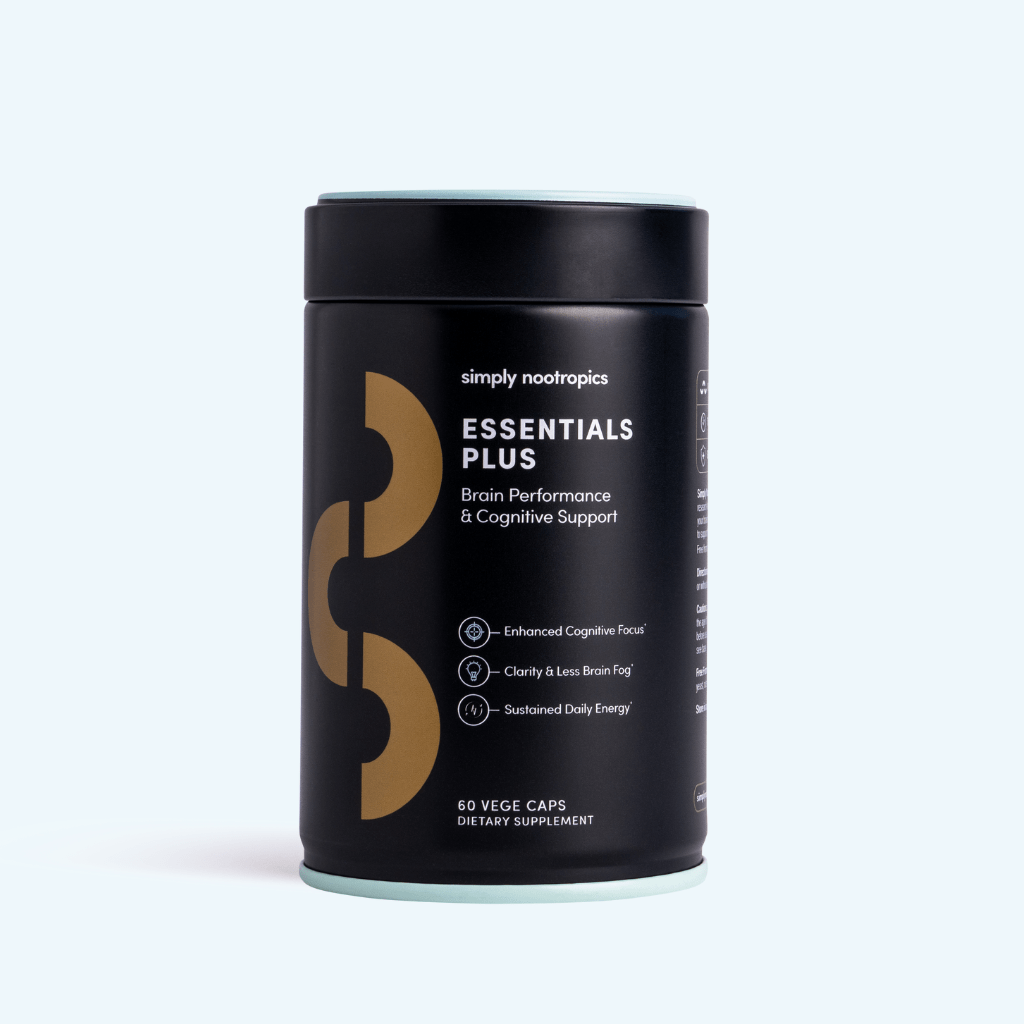
Researchers found that arts and cultural activities were linked to slower biological ageing, with effects that looked similar in size to physical activity. It reframes how we think about staying sharp as we get older, and it sits neatly alongside the way many people already support their focus and mental clarity with a daily nootropic like Essentials Plus.
The idea is simple and quietly radical. Feeding your mind may matter as much as training your body.
What the research actually looked at
The study was published in the journal Innovation in Aging in 2026, led by Professor Daisy Fancourt and colleagues. It drew on data from Understanding Society, the UK Household Longitudinal Study, and analysed 3,556 adults with an average age of 52.
Rather than relying on how old people felt, the team measured biological ageing directly. They used epigenetic clocks, which read chemical marks on DNA to estimate how fast a body is ageing at a cellular level. Seven clocks were included, spanning three generations of the technology.
The creative side covered a broad sweep of everyday culture, including:
-
Participatory arts such as singing, dancing, painting, photography, and crafting
-
Attending exhibitions, concerts, and cultural events
-
Visiting heritage sites like historic buildings and monuments
-
Trips to museums, libraries, and archives
How creativity stacked up against exercise
The headline result is the one worth sitting with. Arts engagement was associated with slower ageing on three of the most sophisticated clocks, and the size of that association was comparable to physical activity.
People who took part in arts and cultural activities monthly showed a PhenoAge reading roughly one year younger than those who engaged only once or twice a year. Weekly engagement was linked to a reading about 0.8 years younger. For comparison, weekly physical activity was associated with a PhenoAge reading around 0.59 years younger. The two behaviours landed in the same ballpark.
Interestingly, the links showed up only on the newer clocks that track pace of ageing and health, such as PhenoAge and DunedinPACE. The older clocks that simply estimate chronological age showed no association.
The authors also noted that the benefits tended to be stronger in adults over 40, which is precisely the stage when many people start to notice changes in energy and recall.
Why a paintbrush might work like a workout
Correlation is not proof, and the researchers are careful to say so. This was an observational study, so it cannot show that creativity causes slower ageing. What it can do is point to plausible reasons why the two travel together.
The authors highlight several overlapping pathways:
-
Stress reduction, since creative activity is known to lower psychological and physiological stress, and chronic stress speeds cellular ageing
-
Lower inflammation, a process closely tied to how the body ages over time
-
Cognitive stimulation, as learning a craft or absorbing a gallery keeps neural circuits active
-
Social connection, because so many creative pursuits happen in the company of others
Each of these ingredients supports the brain in its own way. Cognitive stimulation and stress resilience in particular are the same levers that people reach for when they want to protect focus, memory, and mental clarity across a long day.
It is not just how often, but how varied
One of the more useful takeaways for daily life concerns variety. The study found that the diversity of activities mattered as much as the frequency. People who dabbled across many different pursuits saw associations just as strong as those who did one thing very often.
That is encouraging news for anyone who feels they have to master a single discipline to see a benefit. A mix of sketching, live music, a pottery class, and the occasional museum trip appears to give the mind a richer range of stimulation than repeating the same routine.
It also lowers the barrier to entry. Benefits appeared even at fairly modest levels of engagement, from a few times a year upward, and grew stronger with monthly and weekly habits. You do not need to become an artist. You need to keep showing up, in different ways, across your life.
What this means for your daily routine
The practical message is refreshingly gentle. Alongside the movement your body needs, your brain thrives on curiosity, expression, and connection. Picking up a hobby you enjoy is not a frivolous extra. It may be a meaningful part of ageing well.
A few small shifts can make creativity a regular fixture:
-
Choose activities that genuinely draw you in, since enjoyment keeps the habit alive
-
Rotate between a handful of pursuits rather than locking into one
-
Build in the social element by joining a class, choir, or club
-
Pair creative time with the other foundations of brain health, including good sleep, nutrition, and daily movement
Creativity works best as one pillar among several. When it sits alongside solid sleep, a nourishing diet, and steady physical activity, the mind has the full set of conditions it needs to stay sharp.
Give your brain daily support with Essentials Plus
If the new research is a reminder that the brain flourishes when it is well cared for, Essentials Plus is a simple way to fold that care into your morning. It brings together eight nootropic ingredients at clinically studied dosages in a single caffeine-free dose, formulated to support focus, memory, mental energy, and clarity.
Ingredients like Lion's Mane Mushroom, Bacopa Monnieri, and L-Theanine are included for their roles in supporting cognitive function rather than to pad out a label, and every batch is third-party tested and made in New Zealand. Two capsules each morning give your mind steady, stimulant-free support, so you can turn up to your creative pursuits, and the rest of your day, feeling clear and ready.