We talk about stress like it's just a feeling. A bad week at work, a difficult conversation, a season of life that's harder than usual. Something you push through and eventually leave behind.
But stress doesn't just live in your mind. It lives in your cells, your hormones, your DNA - and over time, it leaves a mark that goes far deeper than tired eyes or a short temper.
The science is clear: chronic stress is one of the most powerful accelerators of biological ageing we know of. Here's what's actually happening inside your body, and, more importantly, what you can do about it.
What Stress Does to Your Body at a Cellular Level
When you encounter a stressor - whether it's a looming deadline, a difficult relationship, or just the relentless pace of modern life - your body responds with a cascade of hormones designed to help you survive.
This is the fight-or-flight response, and in short bursts, it's genuinely useful. The problem is that most of us never fully switch it off.
When stress becomes chronic, that is, when your nervous system stays in that heightened state for weeks, months, or years, those same survival mechanisms start working against you.
Telomere Shortening
One of the most studied effects of chronic stress on ageing is what it does to your telomeres. Telomeres are the protective caps at the end of your chromosomes: think of them like the plastic tips on shoelaces that stop them from fraying. Every time a cell divides, telomeres get a little shorter. When they become too short, cells can no longer divide properly, and they begin to malfunction or die.
Chronic stress accelerates this process significantly. Research found that women experiencing high levels of chronic stress had telomeres equivalent to a person 9 to 17 years older.
Cortisol and Inflammation
Cortisol, your primary stress hormone, is anti-inflammatory in the short term. But when it stays elevated over time, your cells become resistant to its signals —==, and inflammation runs unchecked.
Chronic low-grade inflammation is now considered one of the central mechanisms behind accelerated biological ageing, a process researchers have coined inflammageing. It underlies virtually every major age-related condition: cardiovascular disease, cognitive decline, metabolic dysfunction, and more.
Mitochondrial Damage
Your mitochondria, the energy-producing structures inside your cells, are particularly vulnerable to chronic stress. Elevated cortisol increases oxidative stress, which damages mitochondrial DNA and impairs the mitochondria's ability to produce energy efficiently.
The result? Fatigue that sleep doesn't fix. Brain fog that coffee doesn't clear. A body that feels older than it should.
The HPA Axis and Hormonal Disruption
Prolonged stress dysregulates your hypothalamic-pituitary-adrenal (HPA) axis, the system that governs your stress response. This disrupts the production of key hormones including DHEA, melatonin, and growth hormone, all of which play important roles in cellular repair, sleep quality, and longevity.
When these systems fall out of balance, your body's ability to recover, regenerate, and repair is compromised at every level.
The Visible Signs of Stress Ageing
You've probably seen it: someone goes through an extraordinarily stressful period and seems to age visibly. That's not just perception. Chronic stress:
-
Degrades collagen and elastin, leading to fine lines, loss of firmness, and dull skin
-
Disrupts the gut microbiome, impairing nutrient absorption and immunity
-
Impairs sleep architecture, reducing the deep sleep phases where cellular repair happens
-
Elevates blood glucose, contributing to glycation, a process that stiffens tissues and accelerates skin ageing
-
Suppresses the immune system, leaving you more vulnerable to illness and slower to recover
The irony is that many of the things we do to cope with stress - poor sleep, comfort eating, skipping exercise - compound the damage.
What You Can Actually Do About It
The good news is that the body is remarkably resilient. The biological processes that stress accelerates are, to a significant degree, reversible, especially when you address them consistently and at the root level.
1. Prioritise Sleep Like It's Non-Negotiable
Deep, restorative sleep is when your body does the majority of its cellular repair work. It's when cortisol drops, melatonin rises, and growth hormone peaks. Chronic sleep deprivation is itself a major stressor - and one of the fastest routes to accelerated ageing.
2. Move Your Body - But Not Excessively
Exercise is one of the most powerful antidotes to chronic stress. It clears cortisol, supports mitochondrial health, reduces inflammation, and triggers the production of BDNF, a protein that protects and regenerates brain cells.
That said, excessive high-intensity training without adequate recovery can itself become a stressor. Aim for a mix of moderate cardio, strength training, and genuinely restorative movement like walking or yoga.
3. Support Your Nervous System Through Nutrition
What you eat has a direct impact on how your body handles stress. Magnesium, found in leafy greens, nuts, and seeds, is depleted rapidly under chronic stress and plays a central role in regulating the HPA axis. B vitamins are essential for neurotransmitter production and adrenal function. Omega-3 fatty acids reduce neuroinflammation and support mood regulation.
An anti-inflammatory diet rich in whole foods, polyphenols, and diverse plant matter is one of the most evidence-backed ways to buffer the biological effects of stress.
4. Build a Genuine Recovery Practice
This doesn't have to mean meditation, though the evidence for mindfulness-based stress reduction (MBSR) on cortisol and telomere length is genuinely compelling. Recovery can look like time in nature, breathwork, cold exposure, journalling, or simply spending unstructured time with people you love.
5. Address the Biology Directly
Lifestyle changes matter enormously, but so does giving your body the targeted cellular support it needs to repair the damage stress causes.
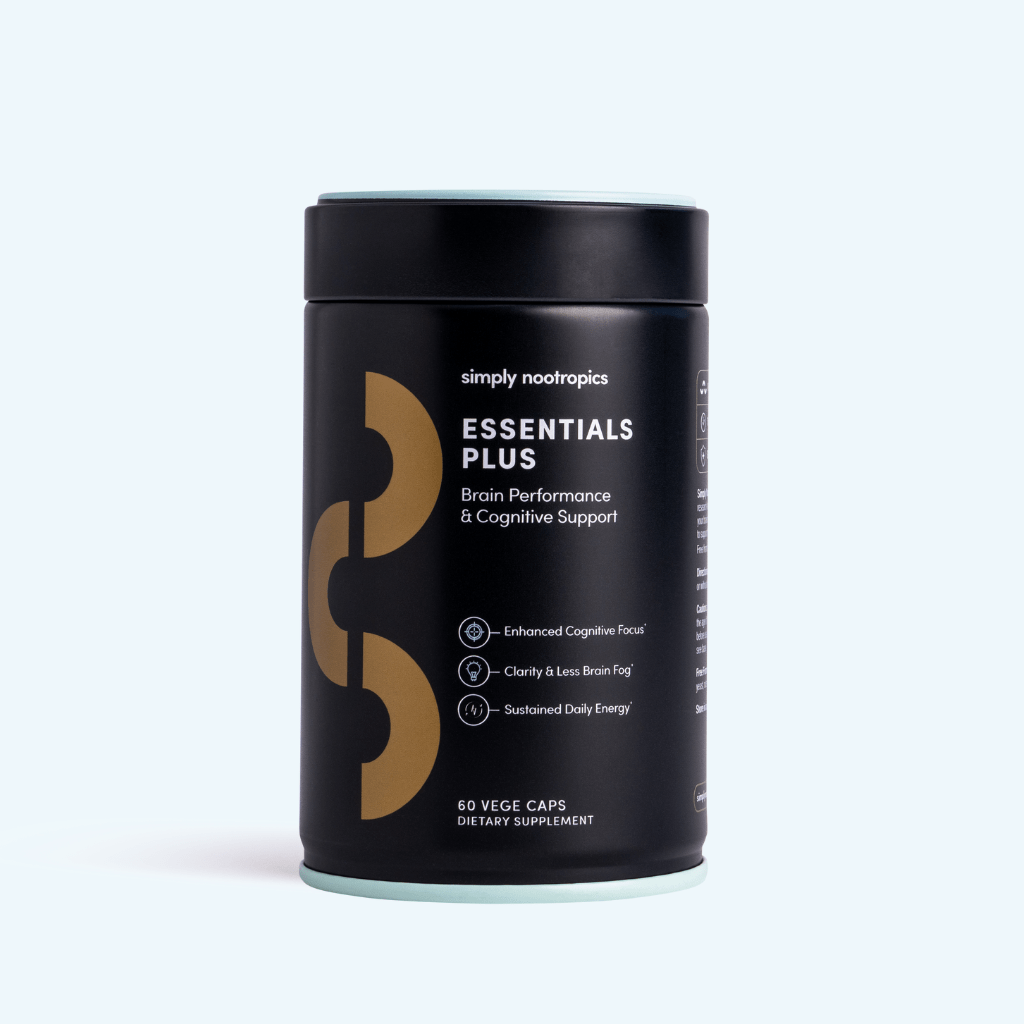
Where Essentials Plus Comes In
Essentials Plus was formulated for exactly what chronic stress does to the brain and body, not by masking the symptoms, but by addressing the underlying biology.
Its adaptogen stack, made up of Ashwagandha, Rhodiola Rosea, Panax Ginseng, and others, works by regulating your stress response at the source, reducing cortisol, building mental resilience, and combating the fatigue that sustained pressure creates.
For the brain, Lion's Mane supports nerve growth and neural repair, while Brahmi, CDP Choline, and L-Theanine restore the focus, memory, and calm clarity that stress quietly strips away.
Essentials Plus won't eliminate stress. But it gives your brain and body the tools to handle it - and recover from it - far better.