If you've struggled with sleep, you've probably heard countless pieces of advice. Avoid caffeine. Don't eat late. Exercise regularly. Create a bedtime routine. But here's what most sleep advice gets wrong: it's not just about what you do, it's about when you do it.
Your body operates on precise timing mechanisms. Your circadian rhythm, core body temperature, hormone production, and digestion all follow predictable patterns. When you work with these natural rhythms instead of against them, sleep becomes dramatically easier.
Here are the evidence-based timing strategies that actually changed my sleep quality for good.
The 3pm Caffeine Cutoff
This is the first rule that genuinely shocks with its effectiveness. Caffeine has a half-life of about 5-6 hours. That means if you have a coffee at 4pm, half of that caffeine is still in your system at 10pm. Even if you manage to fall asleep, that residual caffeine reduces your deep sleep and REM sleep, the restorative stages your brain needs most.
The problem is you don't feel it. You might fall asleep just fine after an evening coffee, so you assume it's not affecting you. But sleep tracking studies show that even when people fall asleep normally after late-day caffeine, their sleep architecture is disrupted. They spend less time in deep sleep and wake up feeling less rested, even with adequate sleep duration.
The 3pm cutoff gives your body enough time to clear most of the caffeine before bedtime. For some people, especially slow caffeine metabolisers, even 3pm might be too late; noon is better. But 3pm is a reasonable starting point for most people.
No Food 3 Hours Before Bed
Your digestive system and your sleep system don't play well together. When you eat, your body increases blood flow to your digestive organs, raises your core body temperature slightly, and triggers the release of digestive hormones. All of this is the opposite of what needs to happen for quality sleep, which requires a drop in core temperature and a shift toward parasympathetic (rest-and-digest, ironically) nervous system dominance.
Eating close to bedtime also increases your risk of acid reflux, which can wake you up or prevent you from falling into deep sleep. Even if you don't consciously wake up, your sleep becomes lighter and more fragmented.
The 3-hour window gives your body time to complete the bulk of digestion before you lie down. Your stomach has largely emptied, your core temperature has normalised, and your body can focus on sleep rather than digestion.
This doesn't mean you need to go to bed hungry. A light snack 1-2 hours before bed is fine for most people, especially if it contains tryptophan (like a small amount of turkey, milk, or banana) which can actually support sleep. But heavy meals need that full 3-hour buffer.
Exercise at Least 3 Hours Before Bedtime
Exercise is excellent for sleep quality, but timing matters enormously. When you exercise, your core body temperature rises, your sympathetic nervous system activates (fight-or-flight mode), and your body releases cortisol and adrenaline. These are all wonderful for performance and energy, but terrible for sleep if they're still elevated when you try to go to bed.
Your body needs time to cool down, literally. Core body temperature needs to drop by about 1°C for you to fall asleep easily. If you've just finished an intense workout, your temperature is elevated and will remain so for several hours.
The 3-hour rule gives your body adequate time for your temperature to normalise, your stress hormones to clear, and your nervous system to shift from sympathetic (activated) to parasympathetic (relaxed) dominance.
This applies mainly to moderate-to-intense exercise. Gentle yoga, stretching, or a leisurely walk within 3 hours of bed is generally fine and can even promote sleep. But if you're doing HIIT, running, heavy lifting, or anything that significantly elevates your heart rate and body temperature, keep it to at least 3 hours before bed, preferably more.
The 90-Minute Sleep Cycle Rule
Sleep doesn't happen in a smooth, continuous state. It occurs in roughly 90-minute cycles, moving through light sleep, deep sleep, and REM sleep before starting over. When you wake up in the middle of a cycle, particularly during deep sleep, you feel groggy and disoriented, even if you've slept for a decent amount of time.
The key is to aim for sleep durations that align with complete cycles: 6 hours (4 cycles), 7.5 hours (5 cycles), or 9 hours (6 cycles). Waking up between cycles, rather than during them, means you're more likely to wake feeling refreshed rather than groggy.
This is why sometimes 6 hours of sleep can feel more refreshing than 7 hours. You're waking up at the end of a cycle with 6 hours, but potentially in the middle of deep sleep with 7 hours.
Of course, individual sleep cycles vary slightly: yours might be 80 minutes or 100 minutes rather than exactly 90. But the 90-minute rule is a useful starting point. Pay attention to how you feel waking up at different durations and adjust accordingly.
Beyond Timing: Supporting Sleep Quality
Timing rules create the foundation for good sleep, but they work even better when combined with proper sleep support.
Your brain needs specific nutrients to produce the neurotransmitters and hormones that regulate sleep. Magnesium for GABA production and muscle relaxation. L-theanine for reducing mental chatter. Adaptogens like Reishi and Tart CHerry for managing stress and cortisol.
When you combine strategic timing with proper nutritional support, sleep transforms from something you struggle with to something that just... happens.
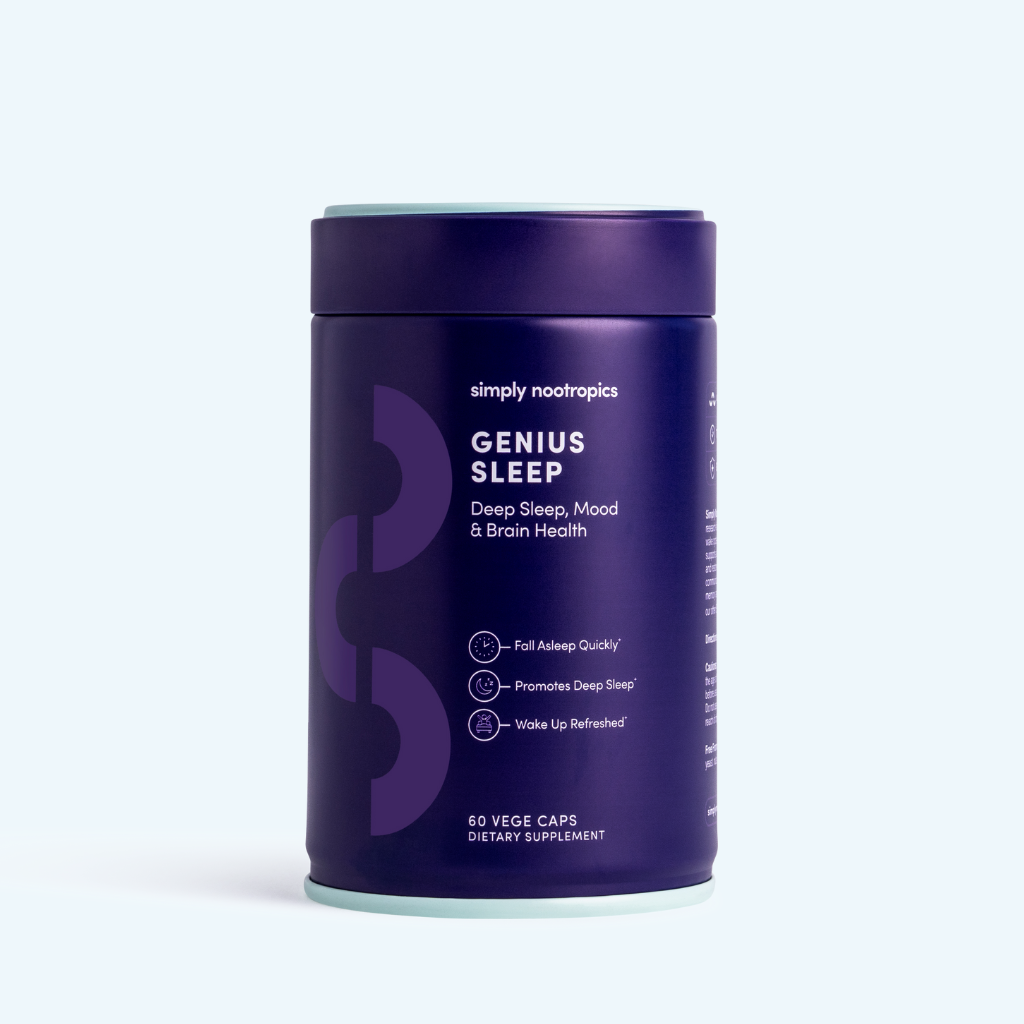
Genius Sleep combines all of these ingredients and more to help you fall asleep faster, sleep more deeply, and wake up genuinely refreshed.
Unlike melatonin-based sleep aids that just knock you out, Genius Sleep supports your body's natural sleep architecture. It helps calm mental chatter, promotes deep restorative sleep stages, and doesn't leave you groggy in the morning.
Because timing gets you 80% of the way there, but the right support gets you all the way to truly restorative sleep.