There's a reason people say their dog is the healthiest member of the household. No overthinking, no skipped meals, no lying awake at 2am catastrophising about an email they sent three years ago. Animals just get on with it, and somewhere in that simplicity, there's a lot we've quietly forgotten how to do.
National Pet Day, celebrated every year on April 11, feels like a good excuse to pay attention.
They move every single day
Your dog doesn't negotiate with itself about whether it feels like a walk today. It just goes. Rain, shine, bad mood, it doesn't matter. Movement is non-negotiable, and it happens regardless of motivation.
Humans, on the other hand, have turned exercise into something that requires the right playlist, the right shoes, a good night's sleep, and ideally a long weekend to recover from. We've made it complicated in a way that makes it easy to skip. And then we feel guilty about skipping it, which somehow makes getting started again even harder.
The research on daily movement is overwhelming and unsurprising: it supports cardiovascular health, mood, cognitive function, metabolic health, and longevity. Not intense training, just consistent, daily movement. A walk. Some stairs. Getting outside. The dose doesn't need to be heroic. It just needs to happen regularly.
There's also something worth noting about the social dimension of walking a dog. People with dogs walk more, spend more time outdoors, and report higher levels of incidental social interaction, the kind that happens naturally rather than being scheduled. That matters more than we tend to give it credit for. Loneliness and social isolation have measurable effects on health outcomes, and a dog that drags you out the door every morning is doing more than just keeping your step count up.
Your dog already knows this. It's been trying to tell you every morning by the front door.
They sleep without guilt
Cats are the obvious example here, but even dogs understand something humans seem to struggle with: rest is not laziness. It's maintenance.
A cat that sleeps 14 hours a day isn't being unproductive. It's recovering, regulating, and preparing to be fully present when it's awake. Meanwhile, most adults are chronically under-slept and oddly proud of it, as though exhaustion is a personality trait worth keeping.
Sleep is when the body does most of its repair work - cellular regeneration, memory consolidation, hormone regulation, immune function. Cutting it short doesn't just make you tired. It accelerates the biological processes associated with ageing and chips away at every other health habit you're trying to build on top of it. You can eat well, exercise consistently, and take care of yourself in a dozen other ways, and poor sleep will quietly undermine most of it.
The average adult needs between seven and nine hours. Most are getting less. And the gap between what we think we can function on and what we actually need tends to be wider than we'd like to admit, partly because chronic sleep deprivation impairs the very cognitive functions that would help us accurately assess how impaired we are.
Your cat has never once set a 5am alarm to grind harder. Something to consider.
They're present in a way we've forgotten
Watch a dog on a walk sometime. Not a human on a walk, a dog. It's not thinking about the meeting it has at 11, or whether it said something weird at dinner last week. It is completely, entirely there - nose down, ears up, fully absorbed in what's in front of it.
We've been told mindfulness is a practice, something to schedule between spinning and a podcast. But for animals it's just the default state. They don't have to try to be present because they haven't built the mental architecture to be anywhere else.
There's real physiological value in this, beyond the philosophical. Chronic stress, the low-grade, always-on kind that most people carry around without even registering it, has measurable consequences. It elevates cortisol, disrupts sleep, suppresses immune function, and accelerates cellular ageing. Over time, it becomes a background hum that colours everything without ever feeling dramatic enough to address.
The antidote isn't complicated. It's closer to what your cat does on a Sunday afternoon than anything you'd find in a productivity app. Stillness. Warmth. No agenda. Animals have been modelling this for us for centuries and we keep scheduling it as a retreat instead of building it into ordinary days.
They remind you what actually matters
The clearest thing animals reflect back at us is that the fundamentals aren't complicated. Move. Sleep. Eat well. Rest without guilt. Be present more often than not. Don't carry stress that doesn't belong to you. Show up for the people, and animals, in your life with some consistency and warmth.
None of this is new information. Most of us know it. The harder part is actually doing it, consistently, without needing it to be perfect or optimised or particularly interesting. Wellness culture has a way of making basic human maintenance sound like a second job, and somewhere along the way we started to associate health with complexity rather than continuity.
Your dog doesn't need a wellness plan. It needs a walk, a meal, and somewhere comfortable to sleep. It will greet you like you've been gone for years when you've been gone for twenty minutes, and it will do this every single day without once questioning whether it's worth the energy.
If you want to actually keep up with your dog - on the walks, on the bad days, on the mornings when your motivation is nowhere to be found - it helps to have a solid foundation underneath everything else. That means managing stress well, sustaining energy across a full day, and not running on empty by the time the lead comes out.
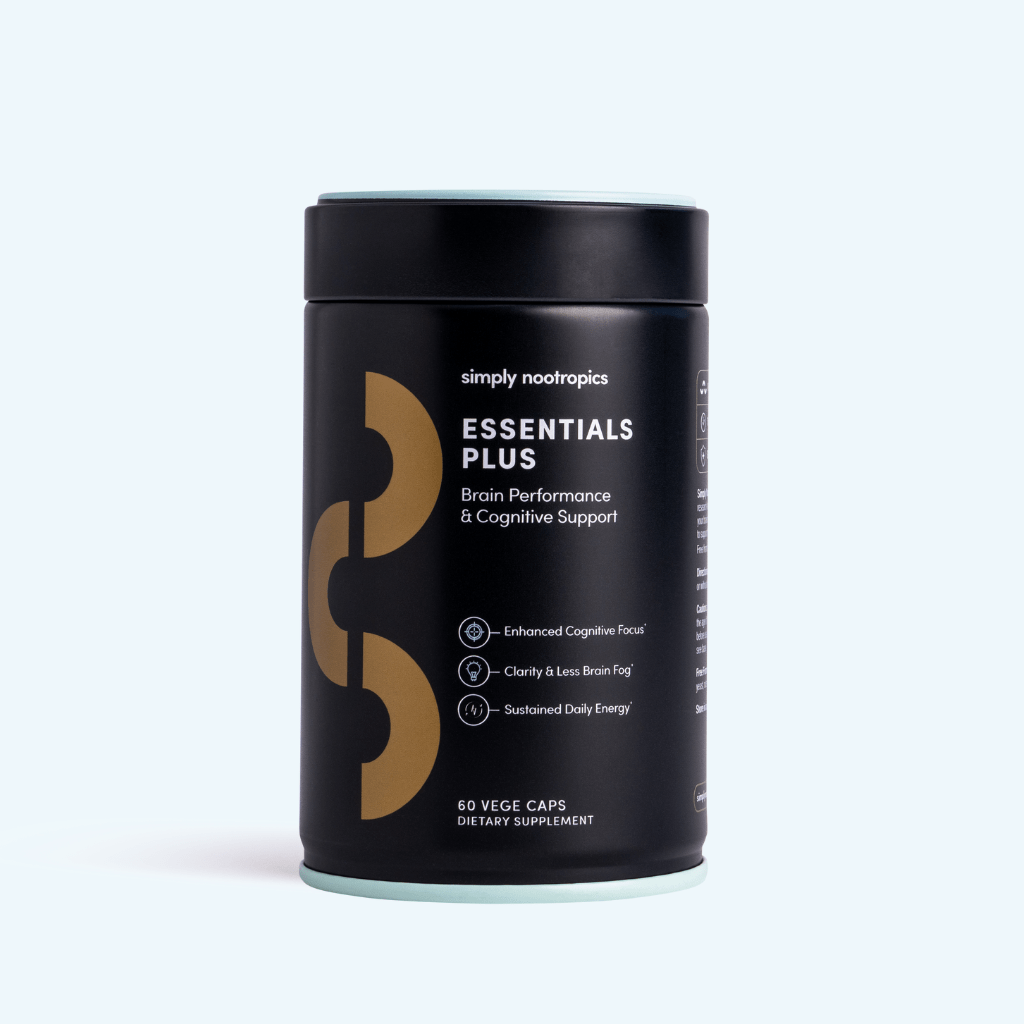
Essentials Plus combines eight nootropics, among which Ashwagandha, Rhodiola Rosea, Panax Ginseng, and Brahmi, to support stress resilience, sustained energy, and mental clarity. Not a stimulant, not a quick fix. Just consistent daily support that compounds over time, the same way good habits do.
Your dog shows up every single day without question. Essentials Plus helps you do the same.