


Some people call me the ‘longevity molecule’ - I'm Nicotinamide Mononucleotide, or NMN for short.
WHAT IS NMN?
NMN is a nucleotide, meaning it’s composed of three key parts: a nicotinamide group (which is a form of vitamin B3), a ribose sugar, and a phosphate group.
NMN is naturally present in nearly all of the body’s 37.2 TRILLION cells. We’re talking 37.2 TRILLION cells, and every single one, from those in your muscles and skin to those in your heart and brain, depends on NMN.

Why Is NMN Important?
NMN has essentially one job: it's the immediate precursor to NAD+, a coenzyme every cell needs to function. NAD+ participates in a very large number of enzymatic reactions — from converting nutrients into usable energy to DNA repair.
NMN is present in cells throughout the body. The conversion from NMN to NAD+ is one of the two main routes cells use to make NAD+, which is why NMN gets the attention it does.

How Does NMN Support NAD+?
NMN helps Support NAD+ through a straightforward process inside your cells. Here’s how it works:
Step 1:Entry into Cell

Step 2: Conversion

Step 3: NMN Becomes NAD+

If nearly all of the cells in your body need NMN, there must be a reason… or more than one. Here’s what NMN does:
Cellular Energy
ATP is the molecule cells use to store and move energy. Your body turns over an enormous quantity of it every day.NAD+ is a required coenzyme in the reactions that produce ATP. It works as an electron carrier — accepting electrons at one stage of the process and handing them on at the next.
Nutrient Metabolism
Metabolism is the set of reactions that convert food into energy and into the building blocks cells need.NAD+ is a coenzyme in the breakdown of carbohydrates, fats and proteins. Each of those pathways depends on it to carry electrons through the sequence of reactions.
Mitochondria
Mitochondria are where most of a cell's ATP is produced.They use NAD+ to move electrons along the respiratory chain — the process that turns nutrients into usable energy. It's the reason NAD+ concentration matters to mitochondrial function.
NAD+ Across the Lifespan
NAD+ concentrations in human tissue have been studied across age groups, and researchers have described several mechanisms thought to be involved.

Oxidative Stress
Free radicals are reactive molecules produced as a by-product of normal metabolism. Antioxidants neutralise them. Researchers describe the balance between the two shifting over time, a state referred to as oxidative stress. Some of the enzymes involved in the cellular response to oxidative stress consume NAD+.

DNA
Cells repair DNA continuously. Some of the enzymes involved in that repair — PARPs — use NAD+ as a substrate, consuming it in the process. This is one of the mechanisms researchers point to when discussing NAD+ turnover.

Cellular Ageing
Cellular ageing is an active area of research, with NAD+ metabolism one of several pathways under investigation. What's established is the biochemistry: NAD+ is a required coenzyme in energy metabolism and a substrate for several repair enzymes. What it means for human ageing is still being studied.
NMN Research
NMN occurs naturally in foods including broccoli, cabbage and avocado, in small amounts. A daily serve of powder contains considerably more than a typical dietary intake.
NMN has been studied in human trials across several areas. Here's where that research sits.

Longevity Pathways
NAD+ is involved in several cellular pathways that researchers study in the context of ageing, including the sirtuin enzymes. How NAD+ availability relates to human ageing is an open research question.

Metabolic Research
NAD+ is a required coenzyme in the metabolism of carbohydrates and fats. Human trials have measured metabolic markers following NMN supplementation, with mixed results across studies.

Skin Research
Skin cells depend on the same energy and repair processes as other tissue. Research in this area is early, and largely preclinical.

Exercise Research
Several trials have looked at NMN in the context of physical performance and recovery, typically in trained or older adults. Findings vary by dose, duration and population.

Neurological Research
Neurons have high energy demands, and NAD+ metabolism in nervous tissue is an active research area. Human evidence here is limited.

Mitochondrial Research
Mitochondria use NAD+ as an electron carrier in the reactions that produce ATP. Trials measuring NAD+ concentration following NMN supplementation have generally reported increases.
Why Simply Nootropics NMN?
Getting those NAD+ levels up again is not that complicated. At Simply Nootropics, we’ve made it simple, effective, and game-changing.

Every batch is tested by an independent laboratory. 99.9% pure β-NMN, non-GMO, with no fillers or additives.

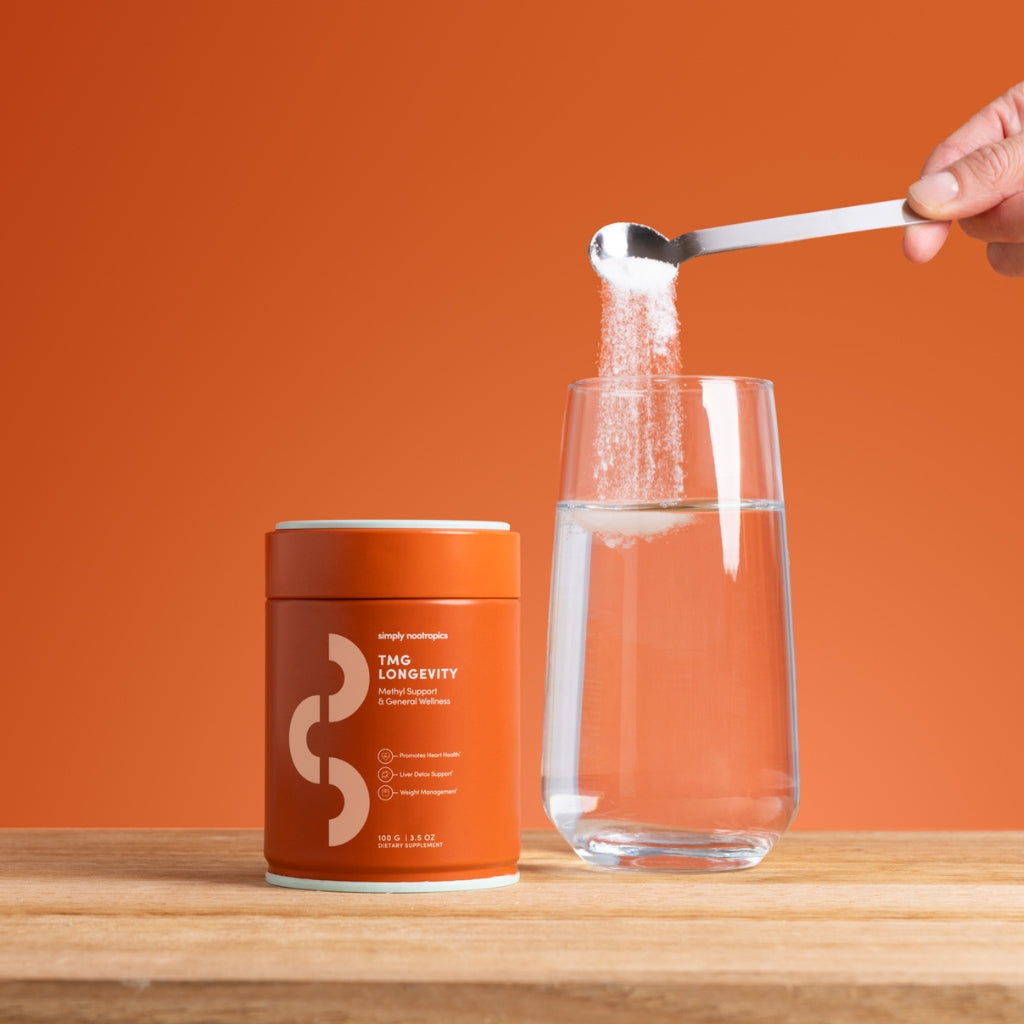
Our NMN is micronised to a fine particle size, so it dissolves clear in cold water without clumping. Capsules use a plant-derived cellulose shell.

Powder is versatile and mixes easily into drinks, and lets you adjust your serve. Capsules are pre-measured and convenient for travel. Both deliver 1000 mg per daily serve.

Every batch is tested by a third-party laboratory for identity and purity. Certificates of analysis are available on request.
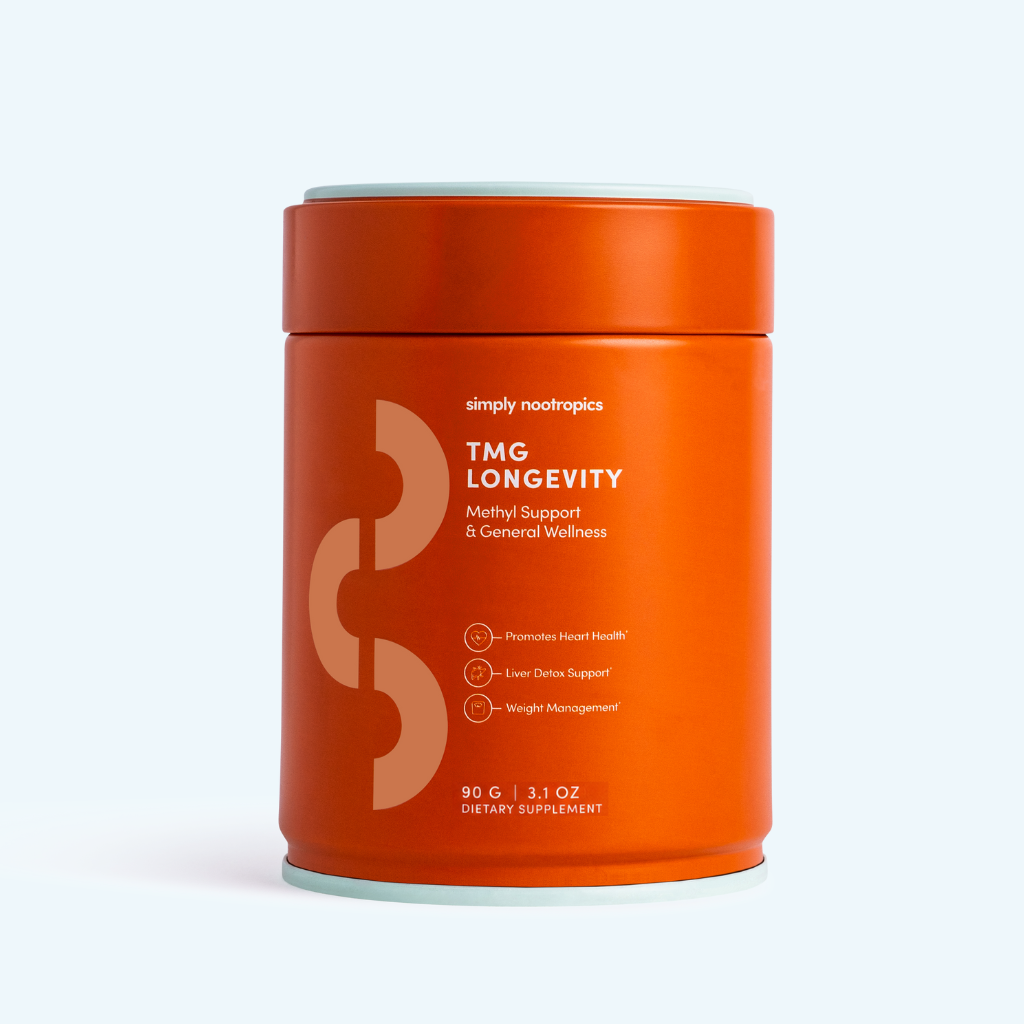
Increase your NAD+ levels with our best selling NMN supplements:

Weight

Cognition

